
Learn
Economic Impact
Waste has a significant economic dimension. Managing waste requires expenditure on collection, transportation, treatment, processing and disposal. At the same time, poorly managed waste creates costs that are often not reflected in waste management budgets, including impacts on health, ecosystems, infrastructure, tourism and productivity.
US$252 billion
Global direct cost of municipal solid waste management in 2020.
US$361 billion
Total cost when wider impacts from pollution, poor health and climate are included.
US$640.3 billion
Projected total annual cost by 2050 without significant changes to the way waste is generated and managed.
The Cost of Poor Waste Management
The economic consequences of poor waste management extend beyond the cost of cleaning up discarded waste.
Uncollected waste can block drainage systems and contribute to flooding, while pollution can increase public health costs and affect livelihoods that depend on clean environments.
The World Bank notes that the economic costs associated with uncollected waste, open burning, dumping and waste-related flooding can exceed the financial cost of providing properly managed waste services.
Not investing in waste management does not eliminate the cost; it often shifts that cost elsewhere in the economy.
Waste as a Resource
Waste can also represent economic value. Materials such as paper, metals, glass, plastics and organic matter can be recovered and reintroduced into productive use, reducing the need for virgin raw materials and creating economic activity around collection, sorting, recycling, composting and processing.
The global waste sector already provides employment for an estimated 18 million urban waste workers, particularly in collection, sorting and recycling.
As economies move towards more circular models, additional opportunities can emerge in recycling, remanufacturing, repair, material recovery and the redesign of products and production systems.
Waste Management and Local Economies
Waste management also has a direct relationship with local economic activity.
Clean and well-managed public spaces can support businesses, tourism and investment, while unmanaged waste can affect the attractiveness and functioning of a place.
This is particularly relevant in tourism-dependent regions such as the Indian Himalayan Region. Seasonal increases in visitors can place additional pressure on local waste systems, requiring additional collection, transportation and processing capacity.
Where this capacity is inadequate, the resulting waste can create costs for local governments and communities while affecting the quality of destinations that depend on tourism.
The Economics of Resource Recovery
When recyclable materials are kept separate and relatively uncontaminated, they retain greater recovery value. When they are mixed with wet, sanitary or hazardous waste, the cost and complexity of sorting increases and some materials may no longer be economically recoverable.
This makes waste prevention, segregation, reuse and resource recovery important not only from an environmental perspective but also from an economic one.
UNEP’s modelling suggests that a transition towards a circular economy, combining waste avoidance, sustainable business practices and comprehensive waste management, could generate a net global economic gain of approximately US$108.5 billion per year by 2050.
The Indian Himalayan Context
In the Indian Himalayan Region, the economics of waste management are shaped by geography as much as by waste volumes.
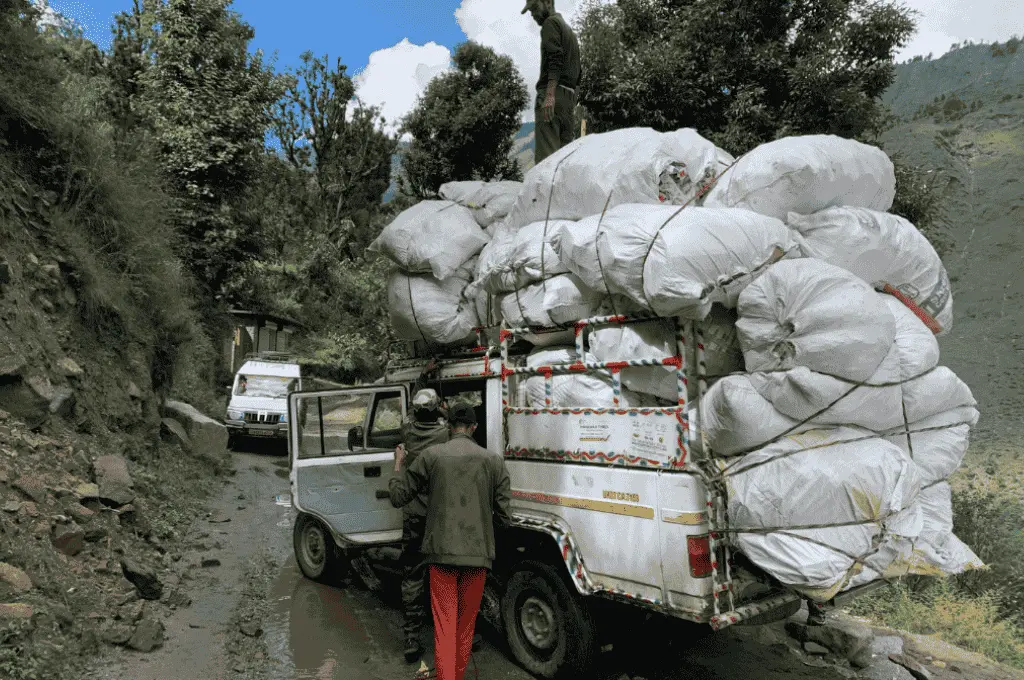
Longer transportation distances, difficult terrain, dispersed settlements and seasonal changes in waste generation can increase the cost of providing collection and processing services.
This makes efficient systems particularly important. Where waste can be prevented, segregated, composted, reused or recovered closer to its point of generation, the quantity requiring transportation and final disposal can be reduced.
For mountain communities, this can have implications for both the cost of waste services and the long-term viability of local waste management systems.
The economic question is therefore not simply how much it costs to manage waste, but how the costs and value associated with waste are distributed. A well-designed system can reduce the costs of disposal, retain material value, create livelihoods and prevent economic costs from being transferred to communities, public services and future generations.