
Learn
Environmental Impact
Waste is not only a matter of what is discarded or where it is disposed of. The way waste is generated, handled and managed can influence climate, air and water quality, soil health, biodiversity and the availability of natural resources.
Globally, municipal solid waste generation reached an estimated 2.56 billion tonnes in 2022 and, under a business-as-usual scenario, is projected to reach 3.86 billion tonnes by 2050.
The World Bank estimates that about one-third of waste globally is currently uncollected or openly dumped, increasing the risk of pollution and environmental damage.
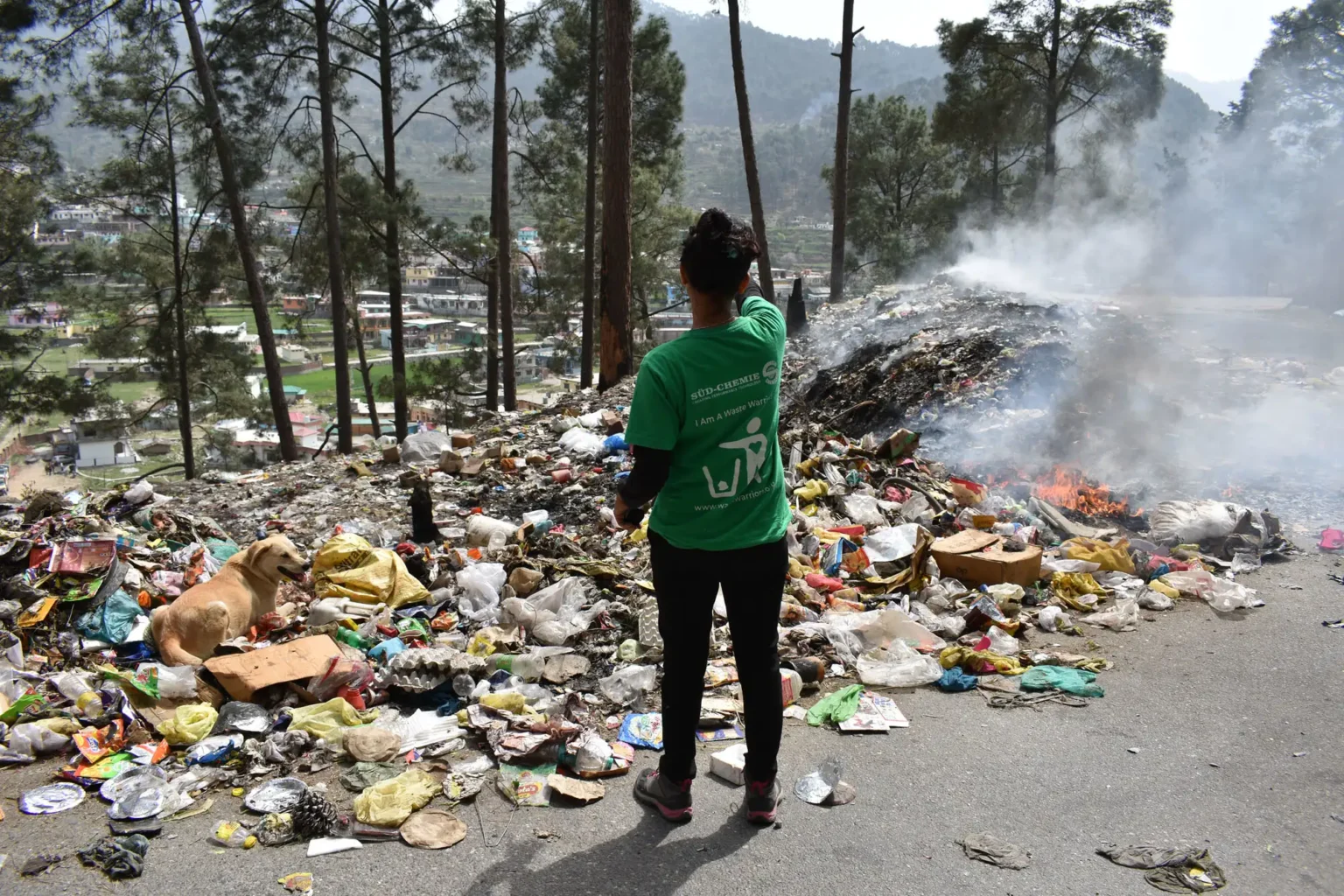
About one-third of waste globally is currently uncollected or openly dumped
Increasing the risk of pollution and environmental damage.
Waste and Climate
Organic waste has an important connection with climate change. When food and other biodegradable materials are disposed of in landfills or open dumps without adequate treatment, their decomposition can generate methane.
The waste sector accounts for around 20% of human-caused methane emissions. Methane has more than 80 times the warming effect of carbon dioxide over its first 20 years in the atmosphere.
Waste also generates greenhouse gas emissions through collection, transportation, processing and disposal.
Reducing waste at source, diverting organic waste for composting or other treatment, and recovering materials can therefore reduce emissions while retaining resources within the economy.
Waste and Water
Poorly managed waste can enter rivers, streams, lakes and groundwater, particularly through open dumping, littering and runoff from waste disposal sites.
As waste breaks down, pollutants can leach into surrounding soil and water. Plastics and other persistent materials can also travel through drainage systems and waterways, eventually reaching larger river and marine ecosystems.
This connection is particularly significant in mountainous regions, where settlements and waste disposal sites are often located along steep slopes and near streams and rivers.
Research on the Indian Himalayan Region has documented the disposal of untreated waste through open burning and dumping in gorges and rivers, contributing to pollution of freshwater systems.
Waste and Biodiversity
Waste can alter habitats and expose wildlife to physical and chemical hazards.
Animals may ingest discarded materials, become entangled in them or change their behaviour around waste accumulation sites.
Hazardous substances can also enter food chains and affect organisms beyond the original point of disposal.
Plastic pollution is particularly persistent. Plastics account for approximately 80% of marine litter, and marine plastic pollution has been documented to affect more than 800 marine species through ingestion, entanglement and habitat change.
For the Indian Himalayan Region, the implications are especially important because waste can accumulate in forests, river systems, trekking routes and other ecologically sensitive landscapes.
A 2021 review using CPCB data estimated that the IHR generated approximately 1.905 million tonnes of solid waste annually, of which around 0.413 million tonnes was treated.
Waste and Soil
Open dumping and poorly managed disposal can introduce plastics, heavy metals, chemicals and other contaminants into soil.
These pollutants can persist for long periods, affect soil organisms and, in some cases, move from soil into water or the food chain.
Land also has a finite capacity to accommodate waste.
When recyclable and biodegradable materials are sent to disposal sites instead of being recovered, additional land is required for waste storage while potentially valuable materials are permanently lost from productive use.
UNEP identifies the contamination of soil, water and air by hazardous substances from mismanaged waste as part of the wider global pollution crisis.
Waste and Resource Loss
Every discarded product represents resources that have already been extracted, processed and transported.
When materials such as paper, metals, glass, plastics and organic matter are disposed of rather than recovered, the environmental impacts associated with extracting new resources continue.
Waste management therefore has an important role in moving away from a linear “take–make–dispose” model towards more circular systems, where materials remain in use for longer and are recovered wherever possible.
UNEP’s 2024 Global Waste Management Outlook identifies waste prevention, improved management and circular economy approaches as important pathways for reducing the environmental costs of waste.
The Indian Himalayan Context
The environmental consequences of waste are particularly pronounced in the Indian Himalayan Region because of its fragile ecosystems, steep terrain, water-dependent communities and limited waste management infrastructure.
A World Bank assessment of mountain areas found that waste processing across IHR states was relatively low, with only 24% of municipal solid waste assessed as processed at the time of the assessment.
This means that the environmental impact of waste in the Himalayas cannot be understood only in terms of the quantity generated.
Where waste is generated, how it is transported, whether it is segregated, what happens during processing and where the residual waste ultimately goes can all determine its environmental footprint.