
Learn
Waste lifecycle
Waste does not begin when an item is thrown away. Its lifecycle starts much earlier, with the extraction of raw materials and the production of goods, and continues through distribution, consumption and eventual disposal or recovery.
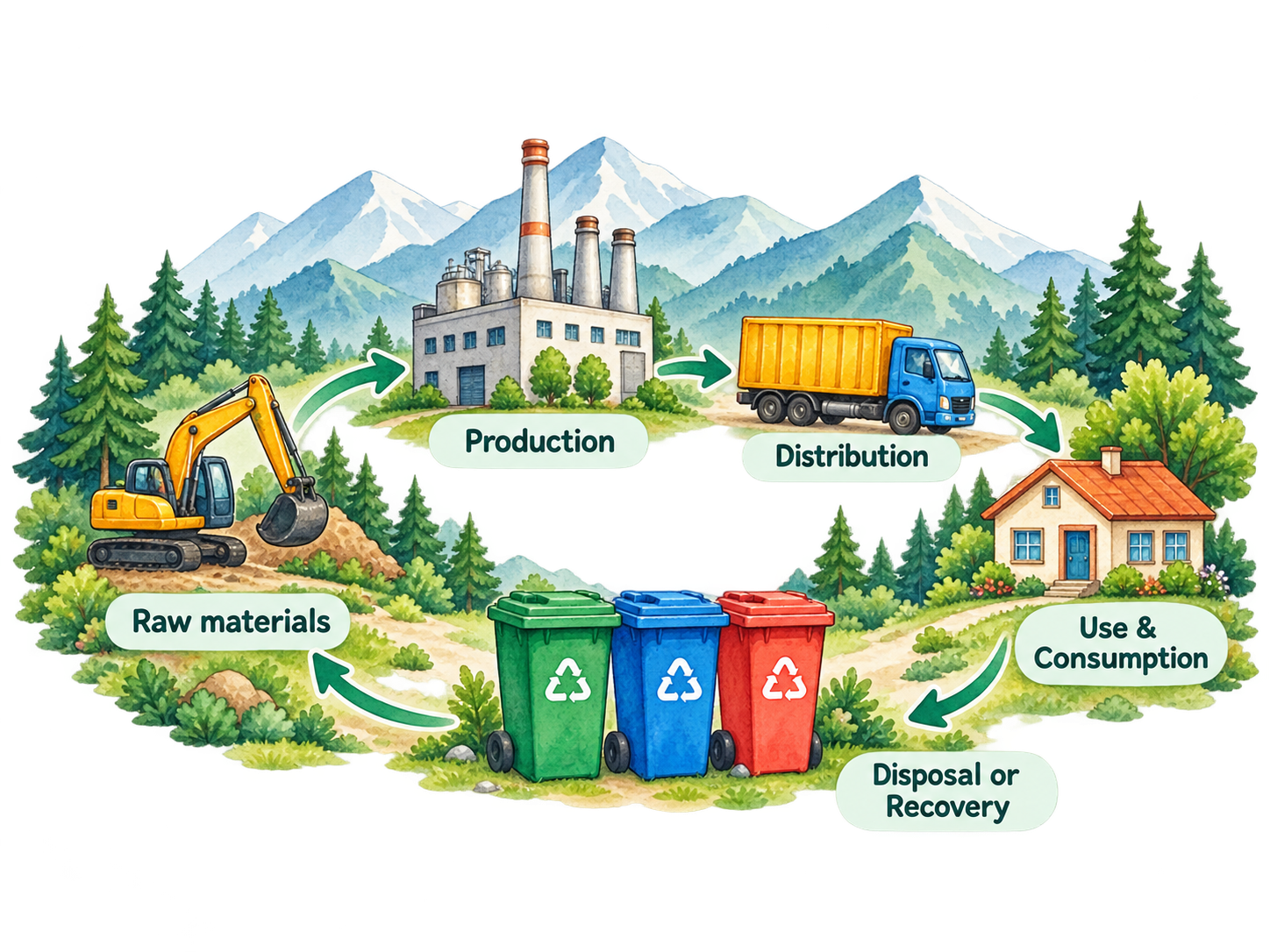
From Product to Recovery
Once a product is discarded, it enters a waste management system. These stages determine whether materials return to productive use or are lost to disposal.
Segregation
Separating waste at source.
Collection
Door-to-door or community collection.
Transportation
Moving waste to processing facilities.
Processing
Sorting, treatment and processing.
Resource Recovery
Recycling, composting and other recovery methods.
Reuse / Recycling
Materials return to productive use.
The pathway is not always linear.
Effective waste management can divert materials back into the economy through reuse, recycling, composting and other forms of resource recovery. Poor segregation, contamination and inadequate infrastructure can reduce the value of recoverable materials and increase the volume of waste requiring disposal.
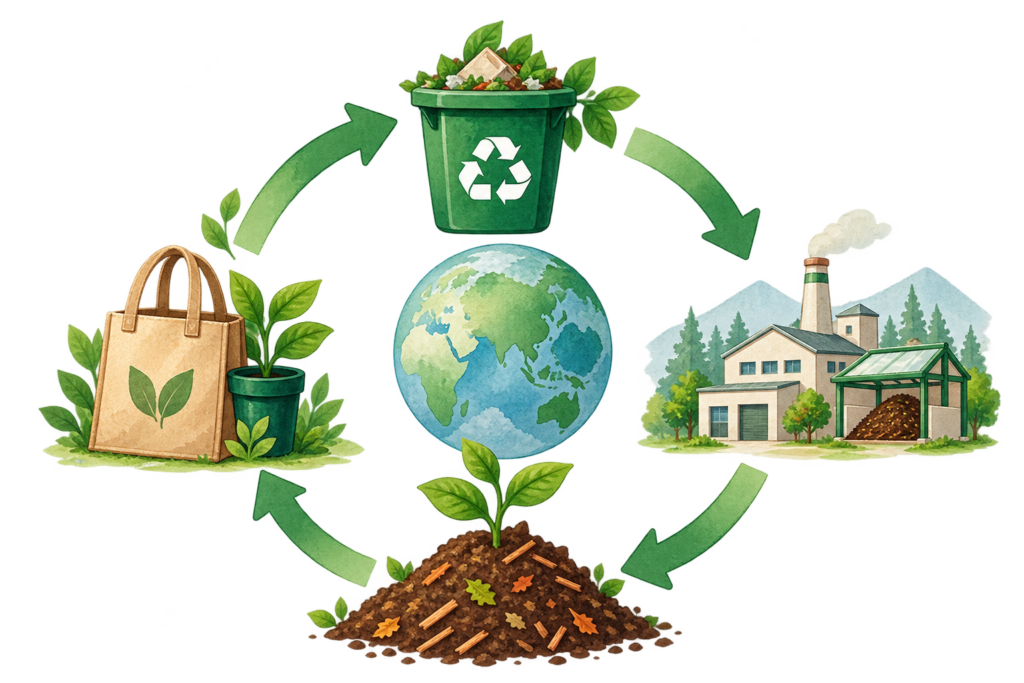
Examples of Waste Lifecycles
Managing organic waste properly helps people, cities and the environment.
Organic Waste: Apple
Apple
grown
grown
→
Harvested
→
Transported
→
Sold
→
Consumed
→
Apple core
discarded
discarded
→
Collected as
organic waste
organic waste
→
Composted
→
Converted
into compost
into compost
→
Returned
to soil
to soil
Segregated Waste: Plastic Bottle
Plastic
produced
produced
→
Bottle
manufactured
manufactured
→
Filled
and sold
and sold
→
Consumed
→
Bottle discarded
separately
separately
→
Collected
as dry waste
as dry waste
→
Sorted
→
Sent for
recycling
recycling
→
Processed into
recycled material
recycled material
→
Used to make
new products
new products
Mixed Waste
Different
materials used
materials used
→
Discarded
together
together
→
Collected as
mixed waste
mixed waste
→
Materials become
contaminated
contaminated
→
Sorting becomes
difficult
difficult
→
Limited
recovery
recovery
→
Remaining waste
sent for disposal
sent for disposal